
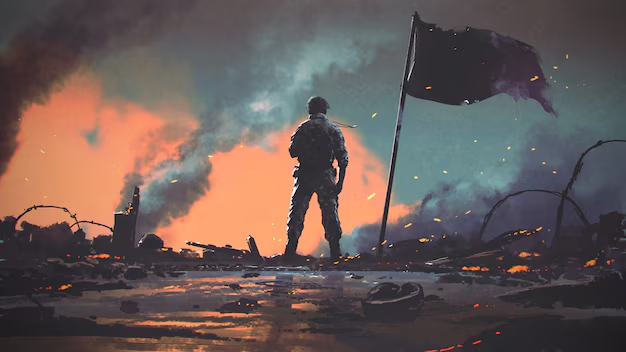
This isn't about physical combat or aggression. The battles that define a real man are often internal—battles against fear, self-doubt, complacency, and comfort. They're battles in the marketplace, in relationships, in personal growth, and in the pursuit of meaning. They're the difficult conversations, the risky decisions, the uncomfortable changes, and the relentless pursuit of something greater than himself.
Most people live in the realm of "what if" and "someday." They think about starting a business but never take the first step. They imagine confronting their fears but remain paralyzed. They dream of transformation but settle for comfort. The real man doesn't just think—he acts. He doesn't just dream—he does. And in doing so, he separates himself from the masses who spend their lives as spectators rather than participants.
Fear is the most common enemy that keeps people trapped in mediocrity. Everyone experiences fear—fear of failure, fear of rejection, fear of judgment, fear of the unknown. But while most people allow fear to dictate their decisions, the real man acknowledges his fear and acts anyway.
Robert was a brilliant engineer with innovative ideas that could transform his industry. But he had a crippling fear of public speaking—a fear so intense that he'd turned down promotions, avoided conferences, and remained invisible despite his talent. For years, he thought about overcoming this fear. He imagined himself speaking confidently to large audiences. But thinking was as far as he got.
The turning point came when his company asked him to present a critical project to potential investors. He could have declined, as he'd done countless times before. Instead, Robert decided to fight the battle he'd only thought about for years.
The preparation was agonizing. His hands shook as he practiced. His voice cracked during rehearsals. The night before the presentation, he barely slept. When he stepped onto that stage, every instinct screamed at him to run. But he didn't. He fought through the fear, delivered his presentation, and secured the funding.
That single battle changed Robert's trajectory. He didn't suddenly become fearless—he became someone who acts despite fear. He went on to speak at international conferences, lead major presentations, and eventually start his own consulting firm. The difference wasn't that his fear disappeared—it was that he stopped letting fear make his decisions.
Robert's story illustrates a fundamental truth: the real man doesn't wait until he feels ready. He doesn't wait until the fear subsides. He fights the battle while afraid, and in doing so, he discovers a strength he never knew he possessed.
One of the most common battles people think about but never fight is the battle of beginning before you feel prepared. Most people wait for the perfect moment, the ideal circumstances, or complete certainty before taking action. The real man understands that perfection is an illusion and that the perfect moment is now.
Carlos worked a factory job for fifteen years, dreaming of starting his own business. He had notebooks full of ideas, plans, and strategies. He talked about it constantly—"someday when I have more money," "someday when I have more experience," "someday when the timing is right."
His wife Maria finally confronted him: "You've been thinking about this for ten years. When are you going to actually do it?"
Her words stung because they were true. Carlos realized he'd been using "not ready" as an excuse to avoid the battle. He was afraid of failure, afraid of losing their modest savings, afraid of looking foolish if it didn't work out.
Carlos made a decision that terrified him: he would start immediately with whatever resources he had. He didn't have much capital, so he started small—offering handyman services on weekends while keeping his factory job. He didn't have a fancy website, so he created a simple social media page. He didn't have business experience, so he learned by doing, making mistakes, and adjusting.
The first year was brutal. Carlos worked seven days a week, faced countless rejections, and made numerous costly mistakes. There were moments when quitting seemed like the only rational option. But he kept fighting the battle that others only thought about fighting.
Five years later, Carlos owned a successful home renovation company with twelve employees. He'd fought through the fear of starting, the exhaustion of building, the pain of setbacks, and the loneliness of entrepreneurship. When friends asked how he did it, his answer was simple: "I stopped thinking about it and started doing it. That's the only difference between me and everyone else who has the same dream."
The Battle of Uncomfortable Conversations
One of the most avoided battles is the battle of difficult conversations. People think about confronting toxic relationships, setting boundaries, expressing their needs, or addressing conflicts—but most never actually do it. They suffer in silence, hoping situations will magically improve. The real man fights this battle head-on.
James grew up with a critical, emotionally distant father who never expressed approval or affection. As an adult, James carried deep wounds from this relationship—wounds that affected his self-esteem, his relationships, and his mental health. For years, he thought about confronting his father, imagining the conversation countless times. But the fear of rejection and conflict kept him silent.
At thirty-five, after his own son was born, James realized he couldn't continue the cycle. He needed to fight the battle he'd been avoiding for decades. He scheduled a meeting with his father and, with his heart pounding, said the words he'd rehearsed for years: "Dad, I need to talk to you about our relationship and how your treatment affected me."
The conversation was excruciating. His father became defensive. Old wounds were reopened. There were moments of anger, tears, and painful honesty. But James didn't back down. He fought through the discomfort, expressed his truth, and set boundaries for their future relationship.
The outcome wasn't a Hollywood ending. His father didn't suddenly transform into the dad James had always wanted. But something profound shifted. James felt liberated. He'd fought a battle that had haunted him for decades. He'd spoken his truth despite the risk. And in doing so, he broke a generational pattern and became a better father to his own son.
James's battle illustrates that the real man doesn't avoid difficult conversations. He doesn't let relationships fester in dysfunction. He fights for truth, for healing, for resolution—even when it's uncomfortable, even when the outcome is uncertain.
The Battle Against Comfort and Complacency
Perhaps the most insidious battle is the one against comfort. It's easy to settle into routines, to accept "good enough," to stop growing and challenging yourself. Most people think about pushing beyond their comfort zones, but few actually do it. The real man continuously fights against complacency.
Michael had a comfortable life—a stable corporate job, a nice house, a predictable routine. He wasn't unhappy, but he wasn't fulfilled either. He felt a nagging sense that he was capable of more, that he was meant for something beyond the comfortable mediocrity he'd settled into.
For three years, Michael thought about making a change. He imagined quitting his job to pursue work that mattered to him. He fantasized about taking risks and living more intentionally. But thinking was safe. Acting was terrifying.
At forty-two, Michael realized that if he didn't fight this battle now, he never would. He made the decision that everyone around him thought was crazy: he left his six-figure job to work for a nonprofit focused on education in underserved communities. His salary was cut in half. His lifestyle had to change dramatically. Friends and family questioned his sanity.
The transition was harder than Michael anticipated. Financial stress, self-doubt, and the loss of status and security tested him daily. There were moments when he questioned whether he'd made a terrible mistake. But he kept fighting—fighting against the temptation to return to comfort, fighting against the voices that said he was foolish, fighting for a life of meaning over a life of ease.
Three years later, Michael had no regrets. He'd helped launch educational programs that impacted thousands of students. He woke up each day with a sense of purpose he'd never experienced in his corporate career. He'd fought the battle against comfort and discovered that a meaningful life is worth more than a comfortable one.
The Battle of Persistence When Everyone Else Quits
The real man is distinguished not by never falling, but by getting up more times than he falls. He fights battles of persistence that others abandon at the first sign of difficulty.
David wanted to be a published author. He wrote his first novel at twenty-five and sent it to dozens of agents. Every single one rejected it. Most people would have given up. David thought about quitting—but he kept fighting.
He wrote a second novel. More rejections. A third novel. Still no success. Friends stopped asking about his writing, assuming it was a failed dream. Family members suggested he "be realistic" and focus on his day job. For ten years, David fought the battle of persistence while others only thought about writing a book.
He wrote in the early mornings before work. He wrote on weekends while friends socialized. He attended writing workshops, joined critique groups, and continuously improved his craft. He accumulated over 300 rejection letters. Each one hurt. Each one made him question whether he was wasting his time. But he kept fighting.
In his eleventh year of writing, David's fourth novel was accepted by a publisher. It became a bestseller. Critics called him an "overnight success." David laughed at the irony. His "overnight success" had taken eleven years, four complete novels, countless revisions, and more rejection than most people experience in a lifetime.
"The difference between me and everyone else who wants to be a writer," David explains, "is that I actually fought the battle. Most people think about writing a book. Fewer actually write one. Even fewer persist through rejection. I'm not more talented—I just refused to quit."
The Battle of Self-Improvement
While many people think about becoming better—healthier, more disciplined, more skilled—the real man actually fights the daily battles required for transformation.
Antonio was addicted to alcohol for fifteen years. He thought about getting sober countless times. He imagined a better life, promised himself he'd change, and made resolutions he never kept. Thinking about sobriety was easy. Fighting for it was hell.
At rock bottom—having lost his job, his marriage, and nearly his life—Antonio finally fought the battle he'd only contemplated. He checked into rehab, attended daily AA meetings, and faced the demons he'd been drowning with alcohol.
The battle was brutal. Withdrawal was physically agonizing. Facing his emotions without numbing them was psychologically torturous. Rebuilding trust with people he'd hurt was humiliating. Every single day required fighting—fighting cravings, fighting old patterns, fighting the voice that said one drink wouldn't hurt.
Five years later, Antonio had rebuilt his life. He'd regained custody of his children, found meaningful work as a counselor helping others with addiction, and discovered a strength he never knew existed. The battle wasn't over—he still fought it daily—but he was winning.
"Everyone thinks about changing," Antonio reflects. "Addicts think about getting sober. Unhealthy people think about getting fit. Unhappy people think about making changes. But thinking doesn't change anything. You have to actually fight the battle, day after day, even when it's hard, even when you don't feel like it. That's what separates those who transform from those who just dream about it."
The Loneliness of the Battlefield
One of the hardest aspects of fighting battles others only think about is the loneliness. When you're actually in the arena—starting the business, confronting the fear, making the sacrifice, doing the work—you're often alone. Others are comfortable in the stands, offering advice and opinions but never risking anything themselves.
The real man accepts this loneliness. He doesn't need cheerleaders or validation. He doesn't need others to understand his journey. He fights because it's who he is, not because others are watching or approving.
Conclusion: Enter the Arena
The real man is the one who fought too many battles others only have thought of—not because he's fearless, but because he values action over comfort. Not because he's guaranteed to win, but because he'd rather fail trying than succeed at nothing. Not because the battles are easy, but because they're necessary.
The world is full of people with dreams, plans, and intentions. But dreams without action are just fantasies. Plans without execution are just wishes. Intentions without follow-through are just excuses.
What battles have you been thinking about fighting? What fears have you been avoiding? What difficult conversations have you been postponing? What dreams have you been delaying? What changes have you been contemplating but never initiating?
The difference between who you are and who you could be is measured not in thoughts, but in battles fought. Not in intentions, but in actions taken. Not in plans made, but in risks accepted.
Stop thinking. Start fighting. Enter the arena. Face the fear. Have the conversation. Take the risk. Do the work. Persist through the pain. Fight the battles that others only think about.
Because when your life is over, you won't be measured by what you thought about doing—you'll be measured by what you actually did. The real man understands this. And that's why he fights.